Hot Water Guide
Signs your hot water system needs replacement.
A practical Brisbane homeowner guide to ageing hot water systems, warning signs, repair decisions and when replacement becomes the smarter move.
A hot water system usually gets ignored until it stops doing its job. You turn on the shower, wait for the water to warm up and expect it to work. When it does not, the whole household feels it quickly.
The problem is that hot water systems rarely fail without warning. Many give signs first: shorter showers, strange noises, rusty water, leaks, temperature swings or higher running costs. Those signs are easy to dismiss at first, especially if the system still works most of the time.
This guide explains the common warning signs that a hot water system may be near the end of its useful life. It is written for Brisbane homeowners who want to make a sensible decision before they are left with no hot water at the worst possible time.
The first question: how old is the system?
Age is not the only factor, but it is one of the most important. A hot water system that is only a few years old is usually worth checking and repairing if the issue is minor. A much older system needs a more careful decision.
Storage tanks, continuous flow units, gas systems, electric systems and heat pump systems all age differently. Installation quality also matters. A unit that was installed well, protected from weather and maintained properly may last longer than one that has been exposed, neglected or poorly fitted.
If your system is getting close to 10 years old and has started showing problems, do not keep throwing money at it without asking the obvious question: is this still worth repairing?
Warning sign 1: hot water runs out too quickly
If your household used to get through morning showers without a problem but now runs out of hot water quickly, something has changed. The system may not be heating properly, the tank capacity may no longer suit the home or the unit may be losing efficiency with age.
Sometimes the issue is simple. A thermostat, valve or element may need attention. In other cases, the system is undersized for how the home is now used. This is common when families grow, bathrooms are renovated or extra fixtures are added.
A plumber should look at the system, household demand and condition of the unit before recommending replacement. A bigger system is not always the answer. The right system is the one that matches the home.
Warning sign 2: the temperature keeps changing
Hot, cold, hot again, then lukewarm. Temperature swings are annoying, but they can also point to deeper issues. The cause may be a faulty valve, a failing heating component, poor flow, sediment inside the tank or an ageing unit struggling to keep up.
Inconsistent temperature is especially frustrating in bathrooms, where comfort and safety matter. If the shower temperature changes suddenly, it can also be risky for children or older people in the home.
If the problem is new, get it checked early. If it has been happening for months and the system is old, replacement may be more practical than another short-term repair.
Age & Corrosion
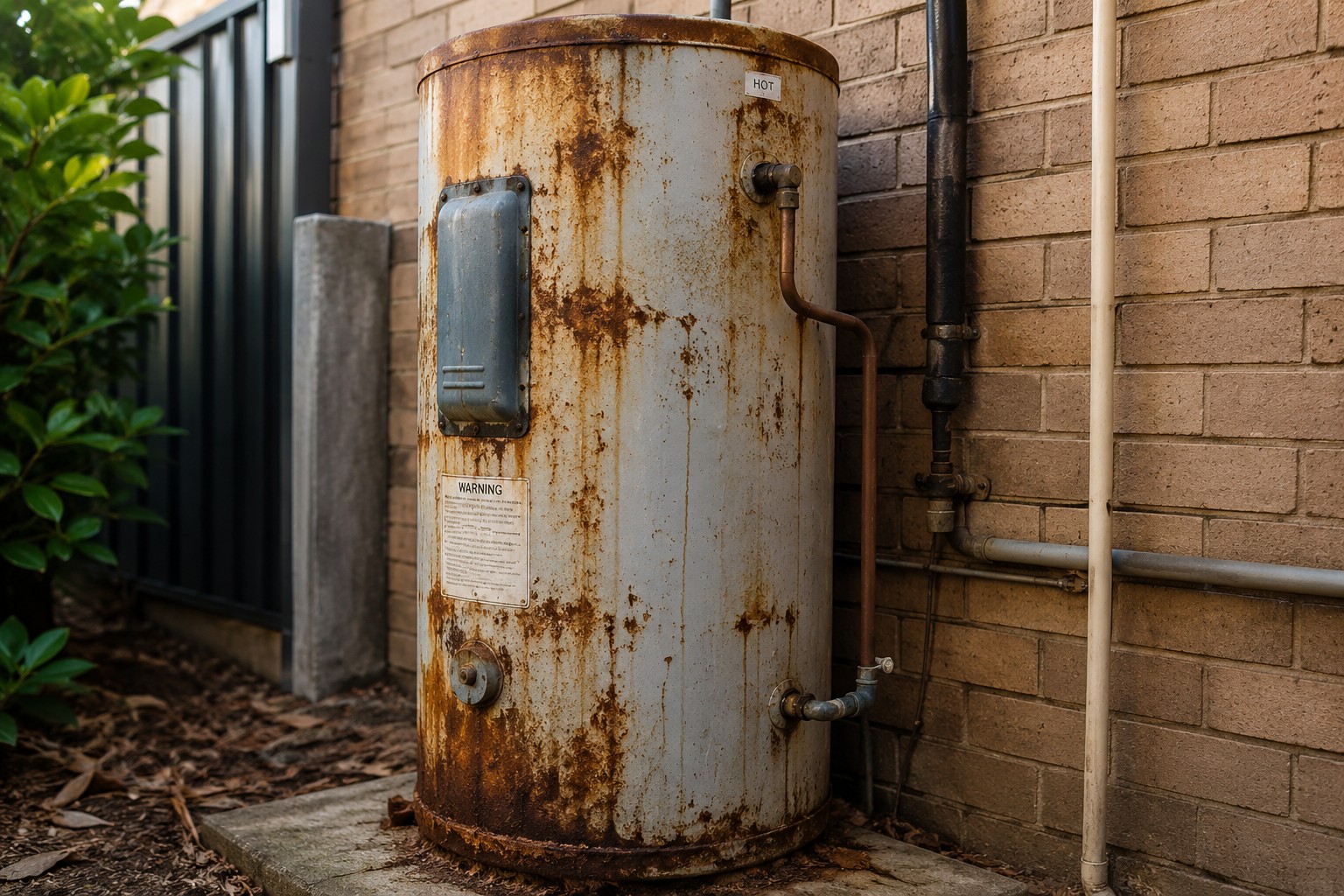
Rust and staining are not cosmetic details.
Rust marks, brown staining, corrosion around valves or visible deterioration near the base of the unit should be taken seriously. They can point to ageing metal, leaks or internal tank problems.
Once a storage tank starts failing internally, replacement is often the safer long-term decision. Patching one visible issue may not solve the underlying problem.
Warning sign 3: the system is leaking
A leaking hot water system should never be ignored. Some leaks are from valves or fittings and may be repairable. Others come from the tank itself, which is far more serious.
Look for water around the base, damp paving, rust streaks, dripping valves, wet insulation or water marks on nearby walls. Outdoor systems can hide leaks because water may drain away or evaporate, so check more than once.
If the tank is leaking, replacement is usually the only sensible option. A tank failure can release a lot of water and create damage quickly, especially if the unit sits near internal walls, garages, storage areas or timber framing.
Warning sign 4: rusty or discoloured hot water
Rusty or brown water from the hot tap can be a sign of corrosion. It may come from the system, pipework or fittings. Either way, it should be checked.
If the discolouration only appears when using hot water, the hot water system becomes a likely suspect. If it appears from both hot and cold taps, the issue may sit elsewhere in the plumbing.
Do not keep using rusty hot water and hope it clears up. It may not be dangerous in every case, but it is a clear sign that something in the system needs attention.
Warning sign 5: strange noises from the unit
Rumbling, popping, banging or hissing noises can point to sediment, pressure problems, heating issues or failing components. Some noises are minor. Some are not. The pattern matters.
If the sound happens every time the system heats, if it has become louder or if it comes with other warning signs, get the unit checked. Noise on its own does not always mean replacement, but noise plus age, rust or poor performance is a bad mix.
Warning sign 6: repairs are becoming frequent
One repair can be normal. Repeated repairs are a message. If you keep replacing parts, calling plumbers or dealing with the same problem, the system may be telling you it is near the end.
At some point, repair money becomes replacement money spent badly. A new system costs more upfront, but it may save you from ongoing callouts, poor performance and the risk of sudden failure.
Professional Inspection
The right decision starts with a proper check.
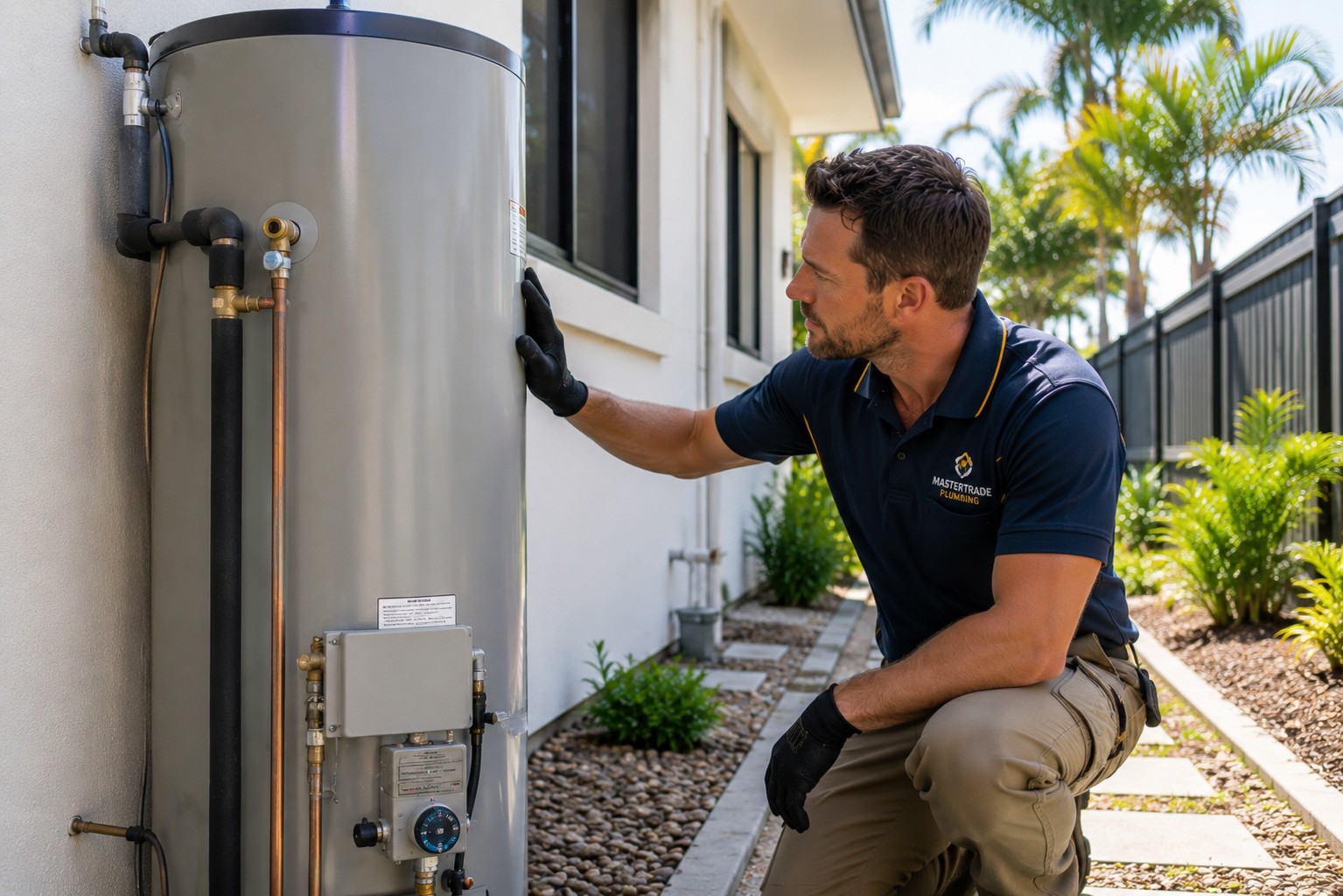
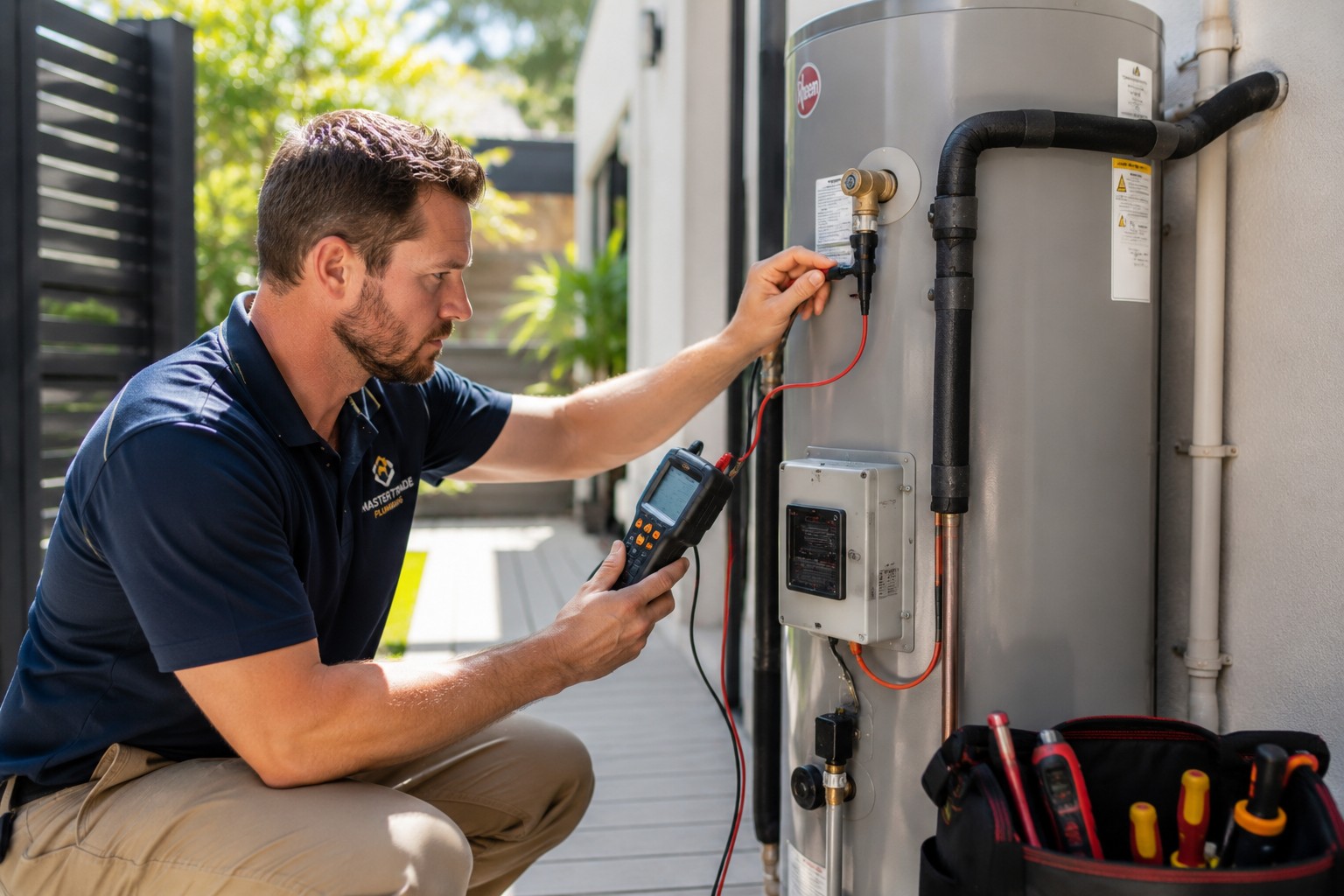
A plumber can inspect the system, check visible condition, test components, assess household demand and explain whether repair or replacement makes better sense.
Guessing is expensive. A proper inspection gives you a clear path before the system fails completely.
Repair or replace: how to think about the decision
The decision is not always obvious. A newer system with a simple part failure may be worth repairing. An older system with rust, leaks and poor performance is usually a different story.
Think about age, repair cost, household demand, energy use, water damage risk and how reliable the unit has been. If the system is already near the end of its life, spending more money on short-term fixes can be false economy.
A good plumber should explain the options without pushing you into a decision you do not understand. The goal is simple: reliable hot water, safe operation and a system that suits the home.
Hot water replacement warning signs checklist
Hot water runs out faster than it used to.
Water temperature changes without warning.
The system is leaking from the tank, valve or pipework.
You can see rust, corrosion or staining around the unit.
The water looks rusty or smells unusual.
The system makes banging, rumbling or hissing noises.
Repairs are becoming more frequent.
The system is old and no longer suits the household.
What to do next
If your hot water system is leaking, rusty, unreliable or no longer keeping up with the household, start with a professional inspection. You can learn more about our hot water system services. If the issue is urgent or water is escaping, contact us through the contact page.
If there are signs of water damage around walls, floors or cabinetry, our hidden leak signs guide may also help you understand what to look for.
FAQs
How long does a hot water system usually last?
It depends on the type of system, installation quality, water conditions and maintenance history. Many systems last around 8 to 15 years, but some fail earlier and some last longer.
Should I repair or replace my hot water system?
If the problem is minor and the system is still reasonably new, repair may make sense. If the unit is old, leaking, rusty or repeatedly failing, replacement is often the smarter option.
Is rusty water a bad sign?
Yes. Rusty water can point to corrosion inside the tank or pipework. It should be checked before the problem gets worse.
Can a leaking hot water system be dangerous?
A leak can damage nearby walls, flooring and outdoor areas. Depending on the system type, electrical or gas safety may also need to be considered. Get it checked quickly.
Hot water system giving you warning signs?
Book a hot water inspection with MasterTrade Plumbing before a weak system becomes a cold-shower emergency.