MasterTrade Plumbing

Leak Detection Guide

7 Hidden Leak Signs Brisbane Homeowners Should Never Ignore

Hidden water leaks can quietly damage walls, floors, cabinetry and structural elements long before obvious flooding appears. Knowing the warning signs can help protect your home and avoid expensive repairs.

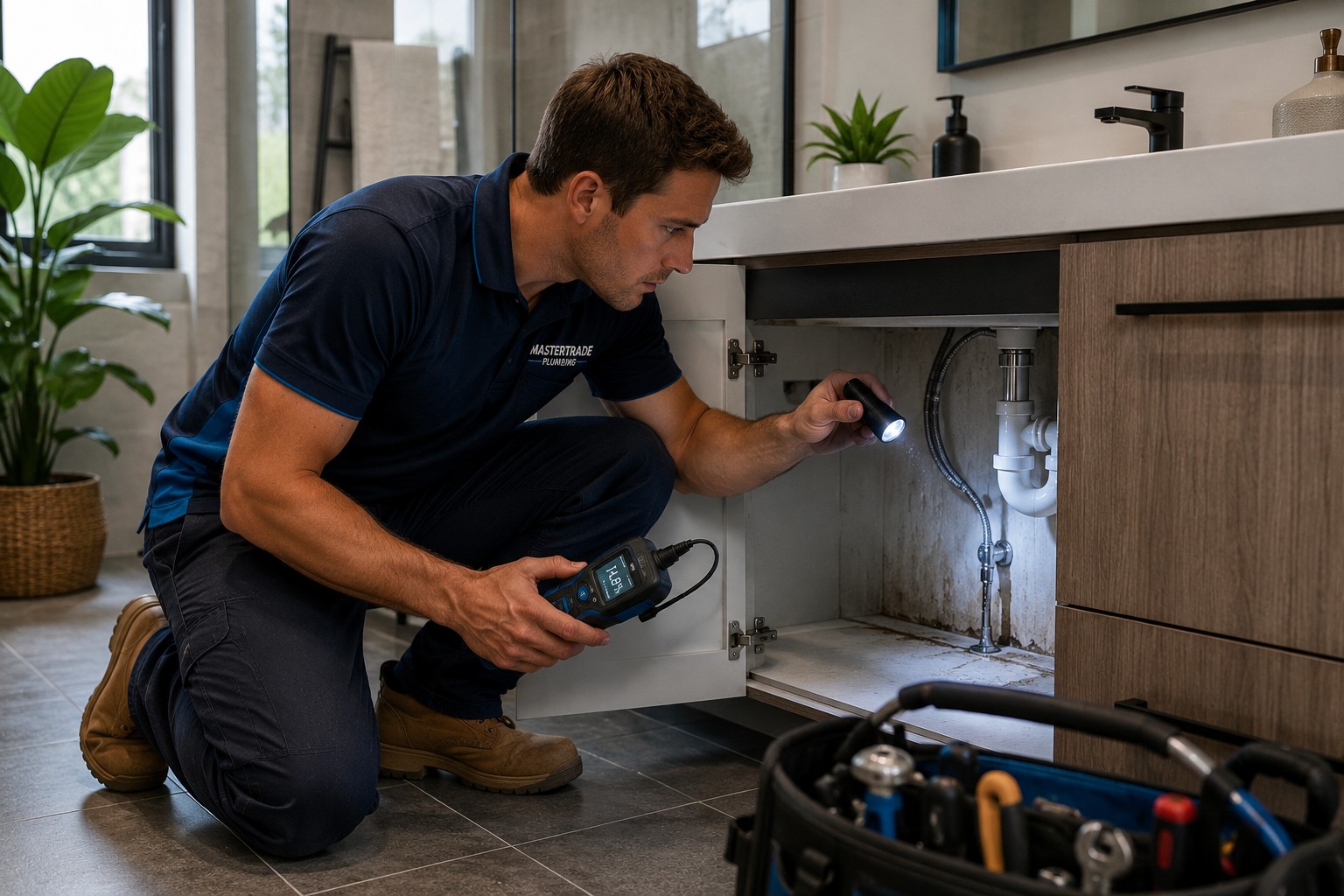
Professional plumber inspecting a hidden water leak beneath a bathroom vanity

What is a hidden water leak?

A hidden water leak is any leak that is not immediately visible. Instead of water pooling in the open, it may be escaping behind a wall, below flooring, inside cabinetry, under a concrete slab, in a ceiling cavity or through underground pipework.

These leaks are dangerous because they often remain unnoticed until damage becomes visible. By the time paint bubbles, flooring lifts or mould appears, moisture may already have affected building materials for days, weeks or even longer.

Brisbane homes can be especially vulnerable because of older pipework in established suburbs, storm season moisture, renovated bathrooms, slab construction and humid conditions that allow damp areas to deteriorate quickly.

Why hidden leaks become expensive

The actual plumbing repair is often only part of the problem. The bigger cost can come from damaged plasterboard, swollen cabinetry, timber movement, mould treatment, flooring replacement, repainting and disruption to kitchens, bathrooms or living areas.

Hidden leaks can also create uncertainty. Homeowners may notice a smell, a stain or a high water bill but not know where the leak is coming from. That is why early investigation matters. The sooner the source is located, the better chance you have of limiting damage.

Unexpectedly high water bills
Damp or discoloured walls
Musty smells inside the home
Water sounds when no fixtures are running
Reduced water pressure
Cracks in walls, tiles or flooring
Wet or unusually green patches in the yard

Sign #1 — Unexpectedly high water bills

A sudden increase in your water bill is one of the most common signs of a hidden leak. If your usage habits have not changed but the bill has jumped, water may be escaping somewhere in the system.

Compare your current bill with previous periods. Consider whether seasonal garden watering, visitors or renovations may explain the increase. If there is no obvious reason, a hidden leak should be investigated.

Brisbane homeowner reviewing an unexpectedly high water bill caused by a hidden leak
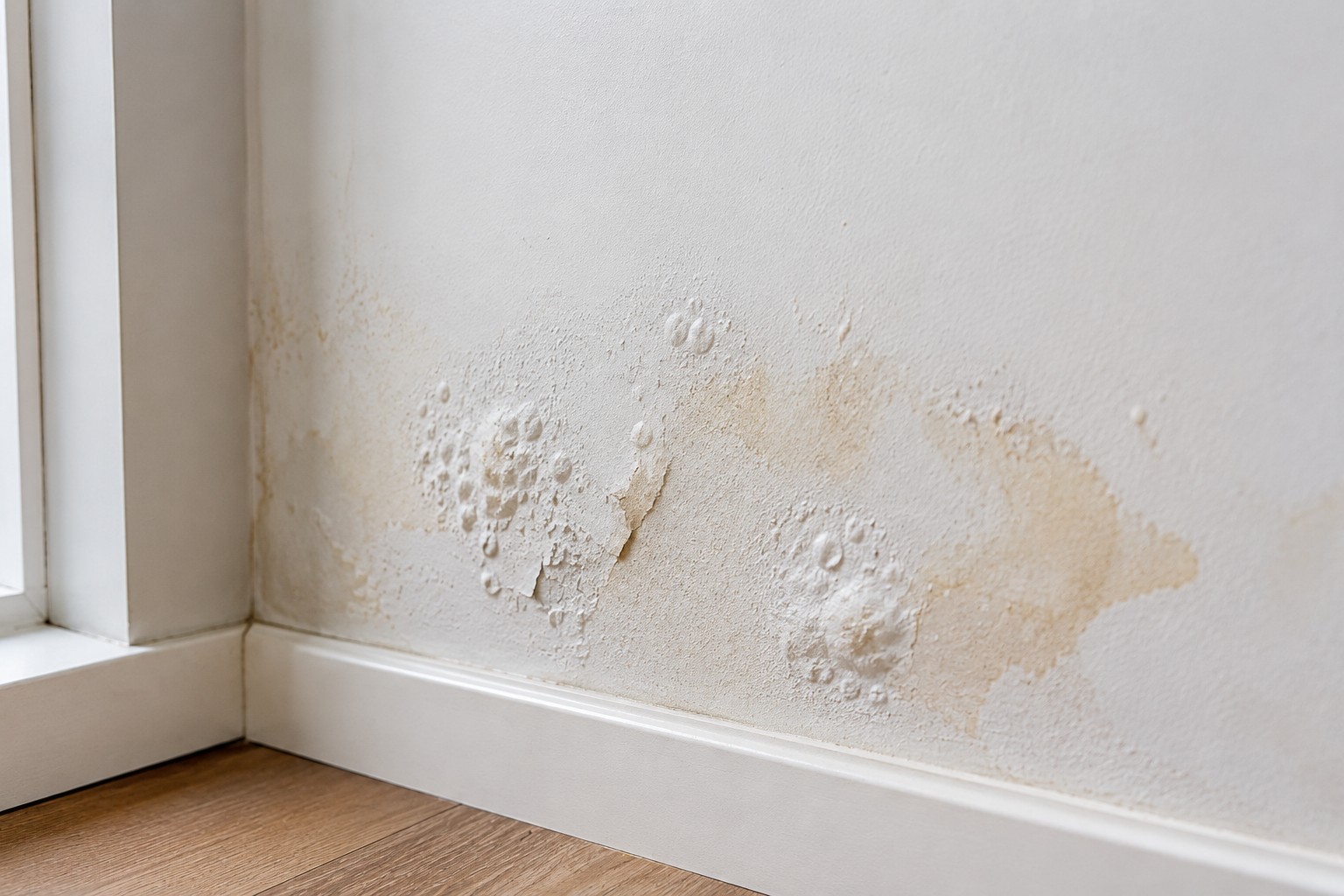
Water stain and bubbling paint on an interior wall caused by hidden moisture

Sign #2 — Damp or discoloured walls

Yellow stains, bubbling paint, soft plaster, swelling skirting boards or discoloured patches can all point to moisture behind the surface. Bathrooms, laundries, kitchens and walls near pipework are common locations.

Do not assume a stain is cosmetic. If moisture is still active, repainting will only hide the symptom while the leak continues.

Sign #3 — Musty smells inside the home

A persistent musty smell can indicate moisture trapped behind walls, beneath flooring or inside cabinetry. This is especially important in Brisbane homes because humidity can make damp spaces deteriorate faster.

Sign #4 — Water sounds when everything is off

If you can hear dripping, hissing or running water when taps, showers, toilets and appliances are off, there may be movement of water somewhere in the pipework. Quiet homes often make these sounds easier to notice at night.

Sign #5 — Reduced water pressure

A leak can reduce pressure because water is escaping before it reaches fixtures. Pressure changes may also be caused by valves, blockages or supply issues, but unexplained pressure loss should not be ignored.

Sign #6 — Cracks in walls, tiles or flooring

Long-term moisture can affect materials around the leak. In some cases, underground leaks may saturate soil and contribute to movement around slabs, paths or foundations. Cracks do not always mean a leak exists, but they can be part of the warning pattern.

Sign #7 — Wet or unusually green patches in the yard

Underground leaks can create damp soil, sinking ground or unusually green patches of lawn. If one area stays wet when the rest of the yard is dry, it may be worth investigating.

Professional Leak Detection

How professional leak detection works

Professional leak detection is about narrowing the likely source before unnecessary damage is done. Depending on the situation, a plumber may use moisture meters, thermal imaging, pressure testing, acoustic listening equipment and visual assessment.

The goal is to identify the most likely leak path and recommend the right repair approach. This is especially valuable where the leak is behind walls, under floors or inside finished areas.

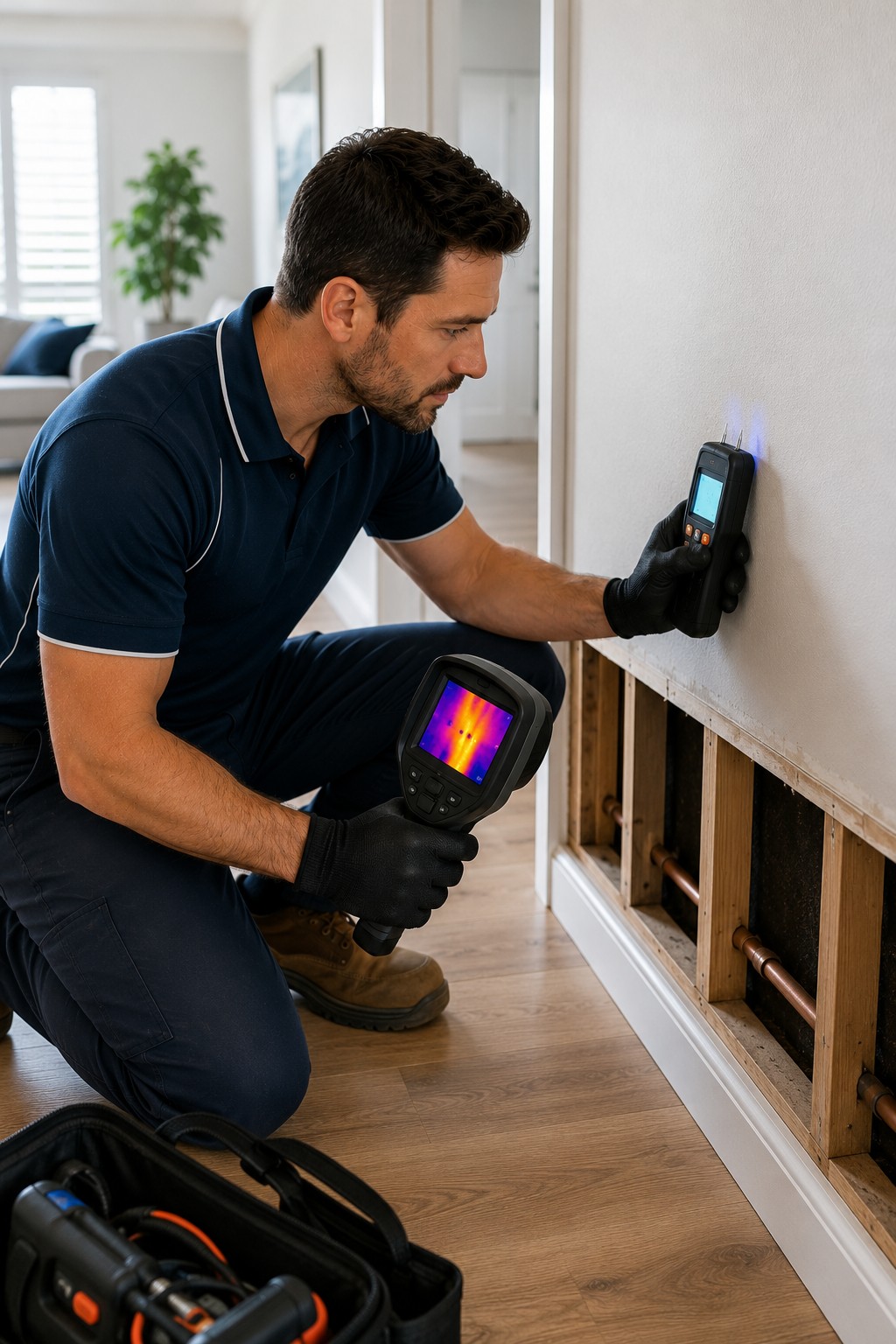
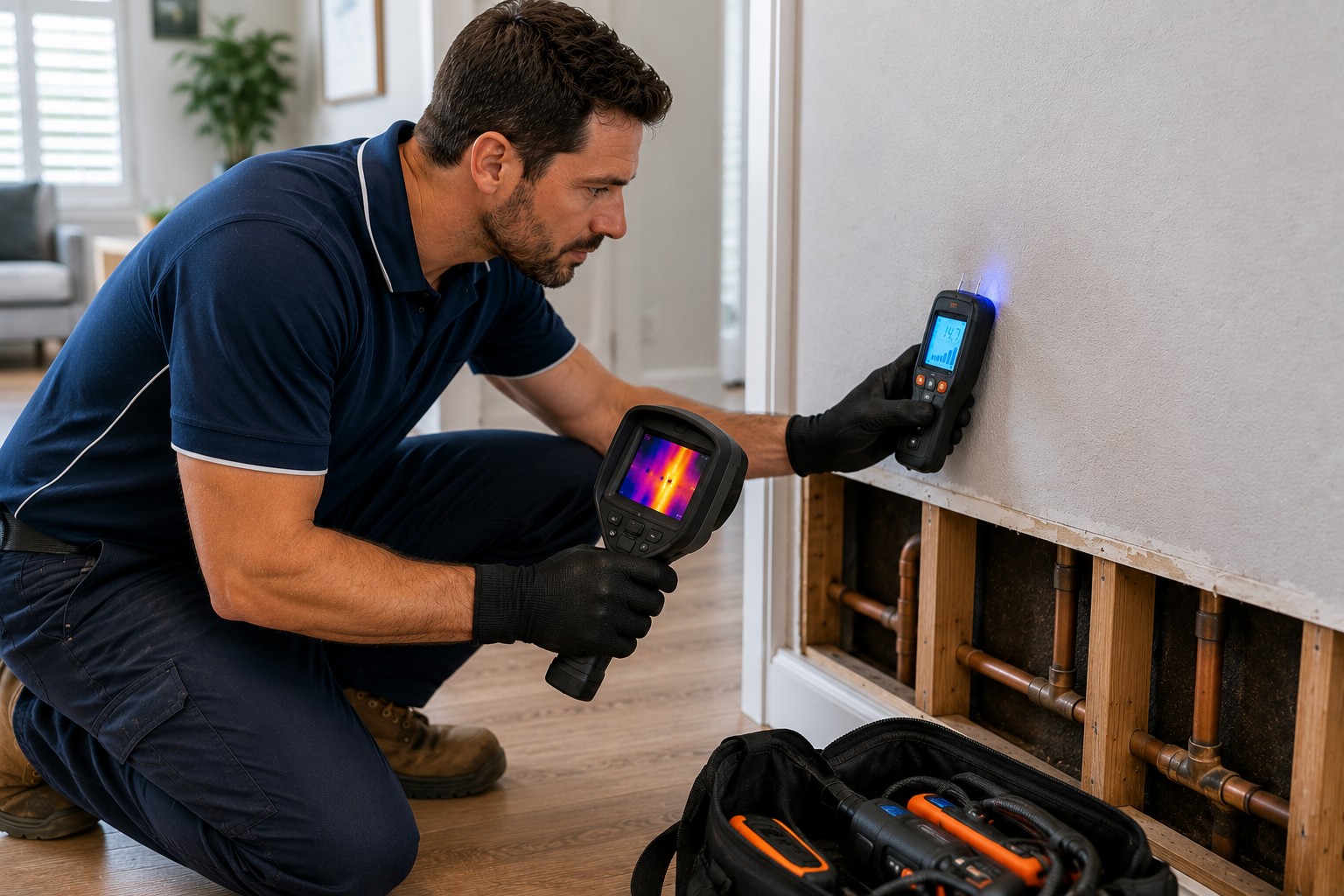
Professional plumber using moisture meter and thermal imaging equipment to locate a hidden water leak
Thermal inspection equipment being used to investigate a hidden water leak behind a wall

Brisbane Homes

Hidden leaks in Brisbane properties

Brisbane properties include older Queenslanders, renovated homes, apartments, townhouses and newer slab homes. Each can experience hidden leaks in different ways. Older copper pipework may deteriorate, renovated bathrooms may conceal failed connections, and underground pipework can be affected by soil movement or tree roots.

Storm season and humidity can also make moisture problems harder to interpret. That is why visible signs should be considered alongside water usage, smells, sounds and pressure changes.

FAQs

Hidden leak detection questions

How do I know if I have a hidden water leak?

Common signs include high water bills, damp walls, musty smells, water sounds when taps are off, reduced pressure, unexplained stains and wet areas around the property.

Can a hidden leak increase my water bill?

Yes. Even a small leak can waste a significant amount of water over time, especially if it is continuous and hidden behind walls, under floors or underground.

Can leak detection find leaks without removing walls?

Professional leak detection can often narrow down the likely leak location using moisture meters, pressure testing, acoustic listening and thermal imaging before invasive work is considered.

Should I ignore a small water stain?

No. A small stain may be the visible sign of a larger hidden moisture problem behind the wall, ceiling or cabinetry.

Need Leak Help?

Think you may have a hidden water leak in Brisbane?