Roof Plumbing Guide
Roof plumbing maintenance checklist for Brisbane homes.
A practical guide to gutters, downpipes, roof drainage and stormwater checks before heavy rain exposes the weak spots.
Roof plumbing is easy to ignore because most of it sits above your normal line of sight. You walk in and out of the house every day, but you probably do not study your gutters, downpipes, roof valleys or stormwater outlets unless something goes wrong.
The problem is that roof plumbing problems rarely start dramatically. A small section of blocked gutter. A downpipe that does not discharge properly. Leaves building up in a valley. Water pooling beside a pathway. These things look minor until a heavy Brisbane storm arrives and water starts going where it should not go.
This checklist is written for Brisbane homeowners who want to protect their property before the next round of heavy rain. It is not about panic. It is about sensible inspection, clear warning signs and knowing when to call a professional roof plumber.
Why roof plumbing matters in Brisbane
Brisbane homes deal with strong sun, sudden downpours, storm season, mature trees and a wide mix of property styles. A newer home in a leafy suburb may have plenty of roof area and several downpipes. An older Queenslander may have complex rooflines, extensions and older gutters. A bayside home may deal with wind-driven rain. A sloping block in West Brisbane may have bigger stormwater challenges once the water reaches the ground.
Your roof plumbing system has one job: collect rainwater from the roof and move it away from the building safely. If that system fails, water can enter eaves, ceilings, walls, garden beds, retaining areas, subfloors and lower rooms.
That is why roof plumbing is not just a cosmetic issue. It is part of property protection. Clean gutters and working downpipes are not exciting, but neither is repairing a stained ceiling after water has already found its way inside.
Start with the gutters
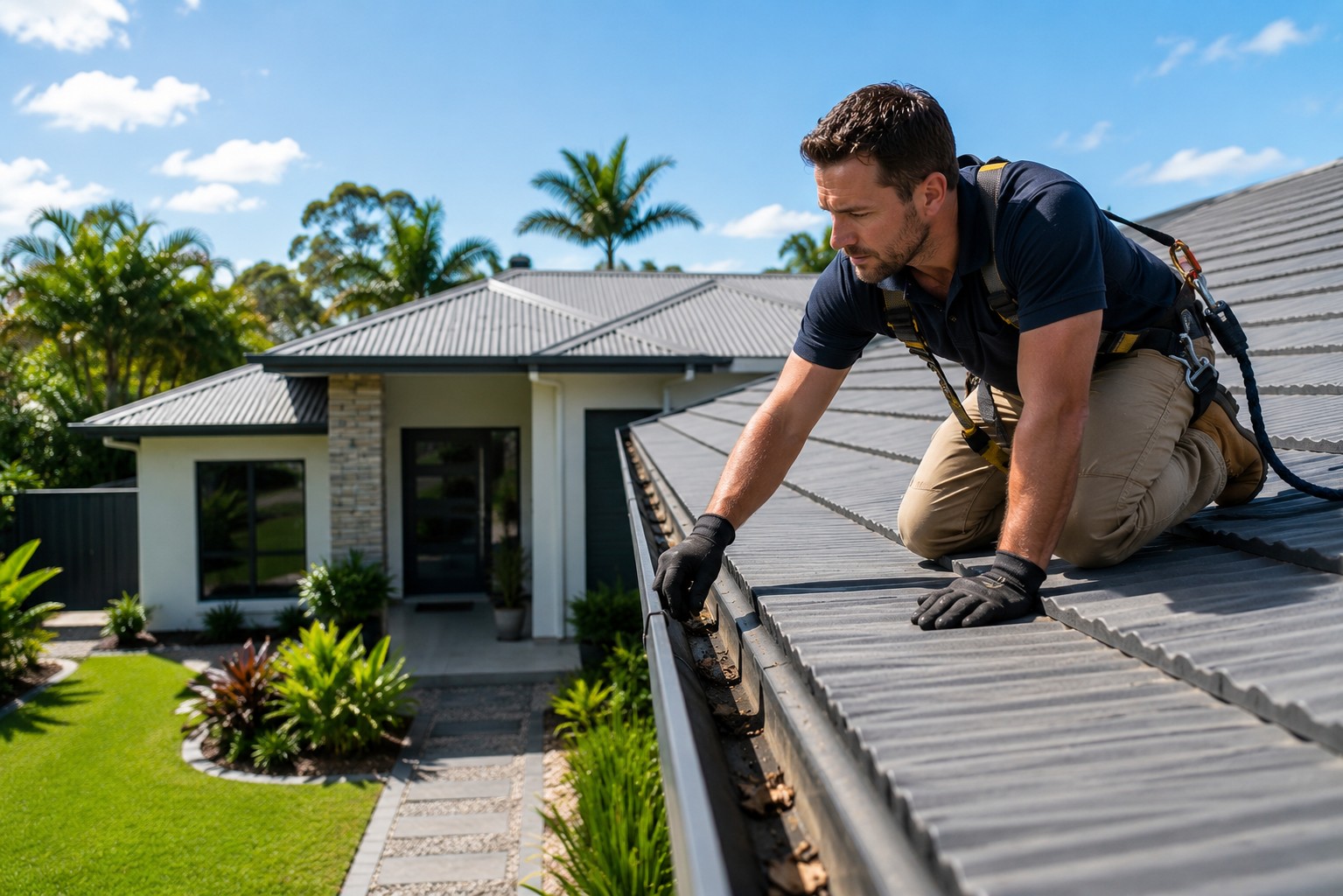
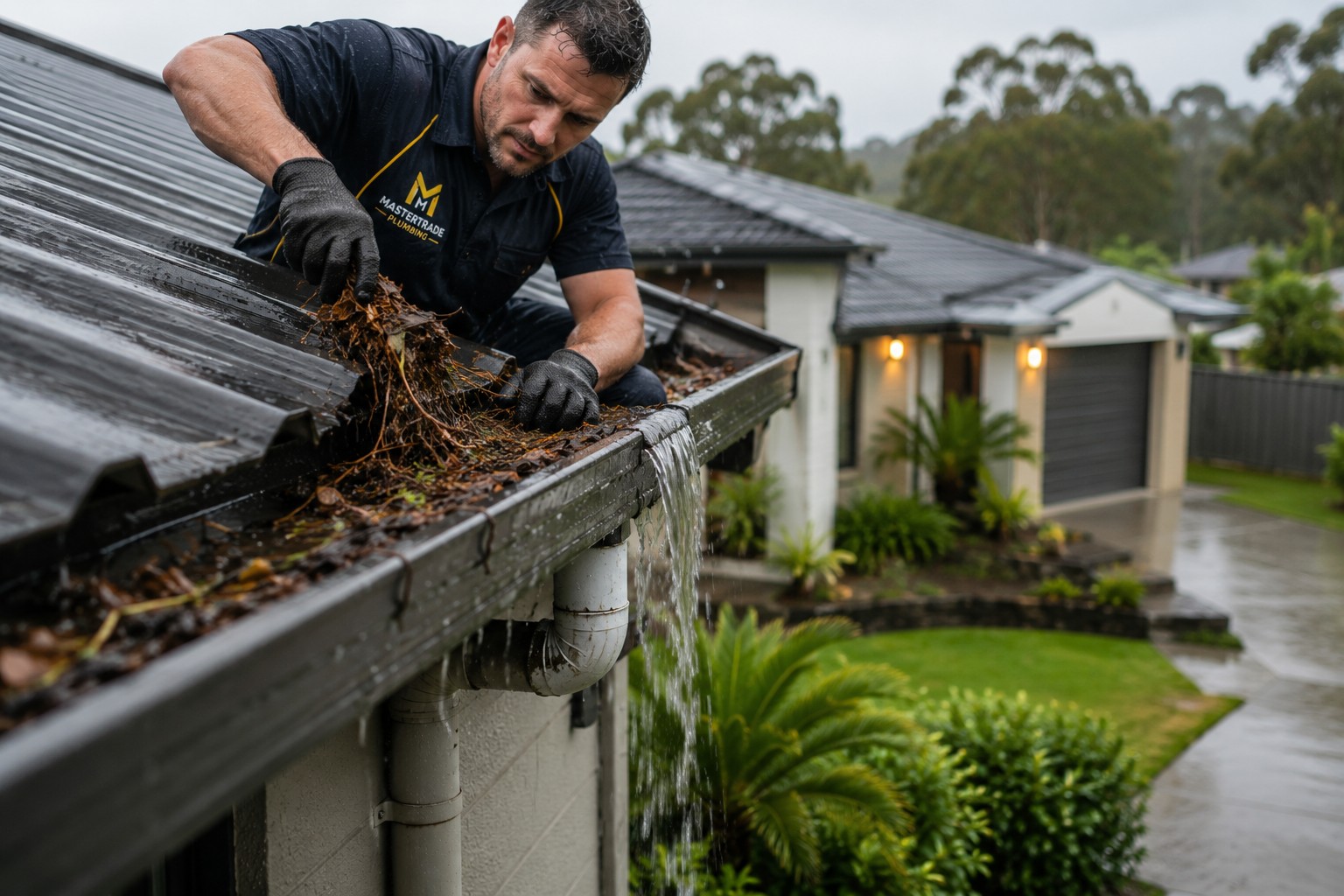
Gutters are the easiest part of the system to understand. Rain runs off the roof, lands in the gutter and should move toward the downpipe. If the gutter is blocked, poorly graded, damaged or undersized, water can overflow.
Look for leaves, twigs, roof grit, tennis balls, bird debris and mud. Also check for sections that are sagging or holding water after rain. A gutter that stays full when the weather is dry is not draining properly. That standing water can add weight, attract insects and speed up deterioration.
Pay close attention to corners and areas near trees. These spots often collect debris first. Valleys are another common trouble area because they can send a lot of water into one section of gutter during heavy rain.
Gutter Inspection
A clean gutter is only useful if the water can keep moving.
Removing leaves is important, but it is not the whole job. The gutter also needs to fall the right way, hold its shape and feed into downpipes that can handle the water volume.
If gutters are regularly overflowing in the same place, the issue may be more than simple leaf build-up. It could be a grading problem, a blocked outlet, poor downpipe placement or a section that needs repair.
Check downpipes and outlets
Downpipes are where roof water leaves the gutter system. If a downpipe is blocked, disconnected or too small for the amount of water it needs to carry, the gutter can back up quickly during heavy rain.
Walk around the home and check each downpipe. Look for cracks, loose brackets, crushed sections, gaps at joints or signs that water has been spilling out. At ground level, check where the downpipe goes. Does it connect into stormwater? Does it discharge onto the ground? Is water being pushed toward the house instead of away from it?
A downpipe that empties straight beside the foundation can create problems over time. Water may pool near paths, garden beds, retaining walls or lower rooms. On sloping blocks, poor discharge can become a bigger issue because water naturally follows gravity toward the lowest point.
Watch what happens during heavy rain
You do not need to climb onto a roof to learn a lot about your roof plumbing. One of the best checks is to watch the home safely from ground level during heavy rain.
Look for water pouring over gutter edges, splashing down walls, shooting out from corners or collecting at the base of downpipes. If one area overflows every time it rains, write it down or take a photo. That gives the plumber better information when they inspect it later.
Also check the ground. Water pooling near the home, around steps, near garden beds or beside retaining walls can point to a stormwater issue. Roof plumbing does not end at the gutter. The system has to keep working once the water reaches ground level.
Check ceilings, eaves and internal warning signs
Some roof plumbing problems show up inside the home before they are obvious outside. After heavy rain, look for water stains on ceilings, cornices, upper walls and around light fittings. Also check eaves, soffits and outdoor ceilings.
A small stain should not be ignored. Water can travel before it appears, so the visible mark may not sit directly under the source of the problem. It may come from a valley, flashing point, blocked gutter, overflowing downpipe or roof drainage defect.
If you see staining, bubbling paint, swelling timber, mould smells or damp patches after rain, it is time to get it checked. Waiting for the next storm to “confirm” the problem is a gamble. The house is not a casino, and water usually wins.
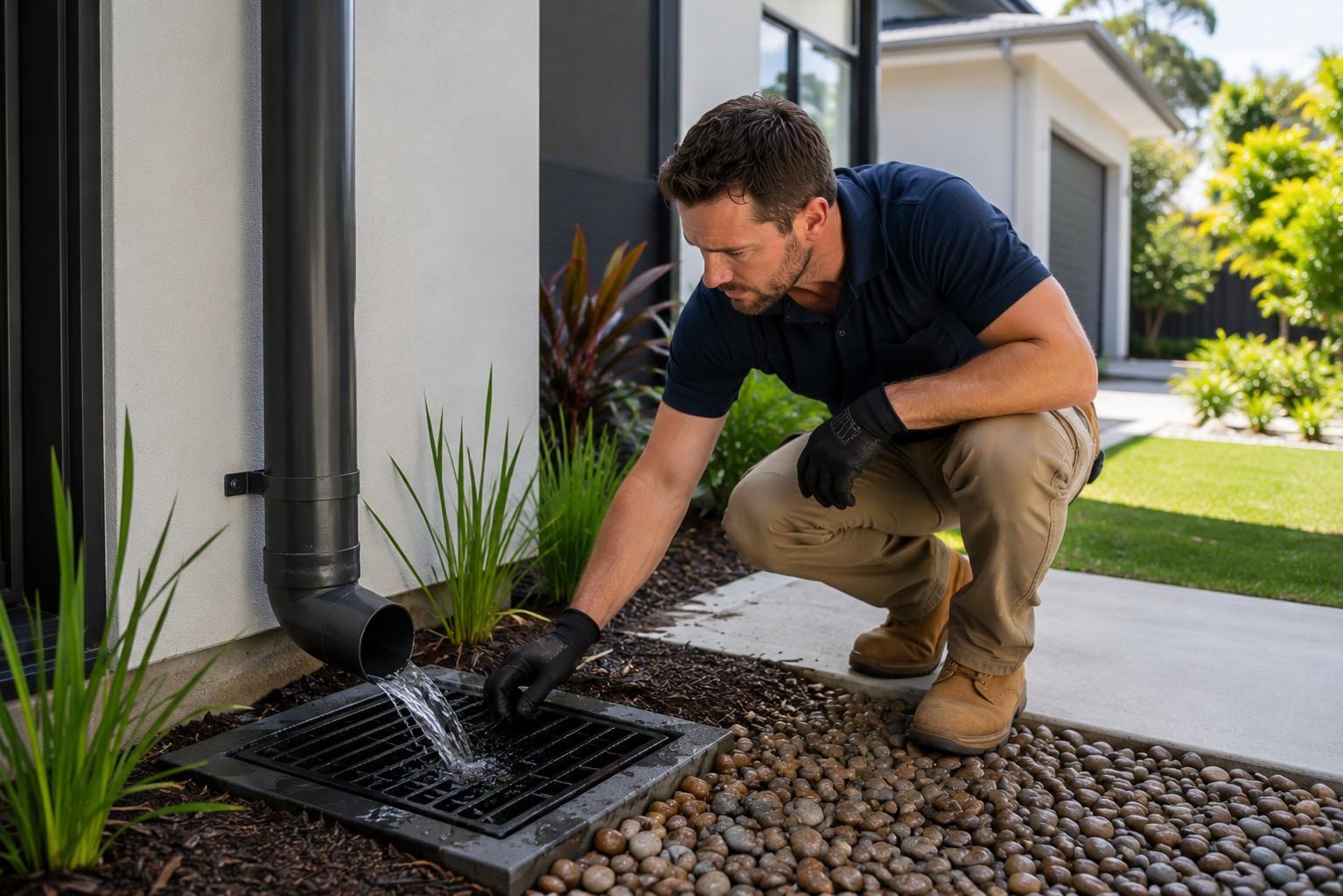
Stormwater Drainage
The job is not finished until water moves away from the home.
Gutters and downpipes can be working, but the property can still have drainage trouble at ground level. Check where the water goes after it leaves the roof system.
Surface pooling, blocked grates and poor discharge points are warning signs that the stormwater path needs attention.
Roof plumbing checklist before storm season
Brisbane storm season is not the time to discover that your roof plumbing has been neglected. Use this checklist before the worst weather arrives.
Check gutters for leaves, sticks, roof grit and standing water.
Look for rust, sagging sections, loose brackets or gaps at gutter joins.
Confirm downpipes are connected properly and not blocked at the base.
Watch where water flows during rain and check if it pools near the home.
Inspect ceilings, eaves and cornices for stains after heavy weather.
Trim back trees that drop leaves directly into gutters and valleys.
Check stormwater grates and drains around the home.
Book a roof plumbing inspection before storm season if anything looks wrong.
When to call a roof plumber
Call a roof plumber if gutters overflow even after cleaning, downpipes are blocked, water stains appear after rain, gutters are sagging, stormwater is pooling near the house or you are not comfortable working at height.
You should also get help if the problem keeps returning. Repeated overflow usually means the cause has not been fixed. It may be a capacity issue, a poor fall, a blocked outlet, badly positioned downpipes or a drainage problem beyond the roofline.
For professional help, start with our roof plumbing services. If water is entering the home during rain, you may need emergency plumbing support. If stains or moisture appear inside, our hidden leak signs guide may also help you understand what to look for.
FAQs
How often should roof plumbing be checked?
Most homes should have gutters, downpipes and roof drainage checked at least once a year. Homes near large trees or exposed to heavy seasonal rain may need more frequent checks.
Are blocked gutters really a plumbing issue?
Yes. Gutters and downpipes are part of the roof plumbing system. If they overflow, water can damage eaves, ceilings, walls, landscaping and lower areas of the property.
What are signs my roof plumbing needs attention?
Common signs include overflowing gutters, water stains, sagging gutters, noisy downpipes, pooling around the home, damp smells and water marks near eaves or ceilings.
Should I clean gutters myself?
Only if it is safe. Working at height is risky. If access is difficult, the roof is steep or you are unsure what you are looking at, use a professional.
Want your roof plumbing checked before heavy rain?
Book a roof plumbing inspection with MasterTrade Plumbing and fix small problems before they become expensive water damage.